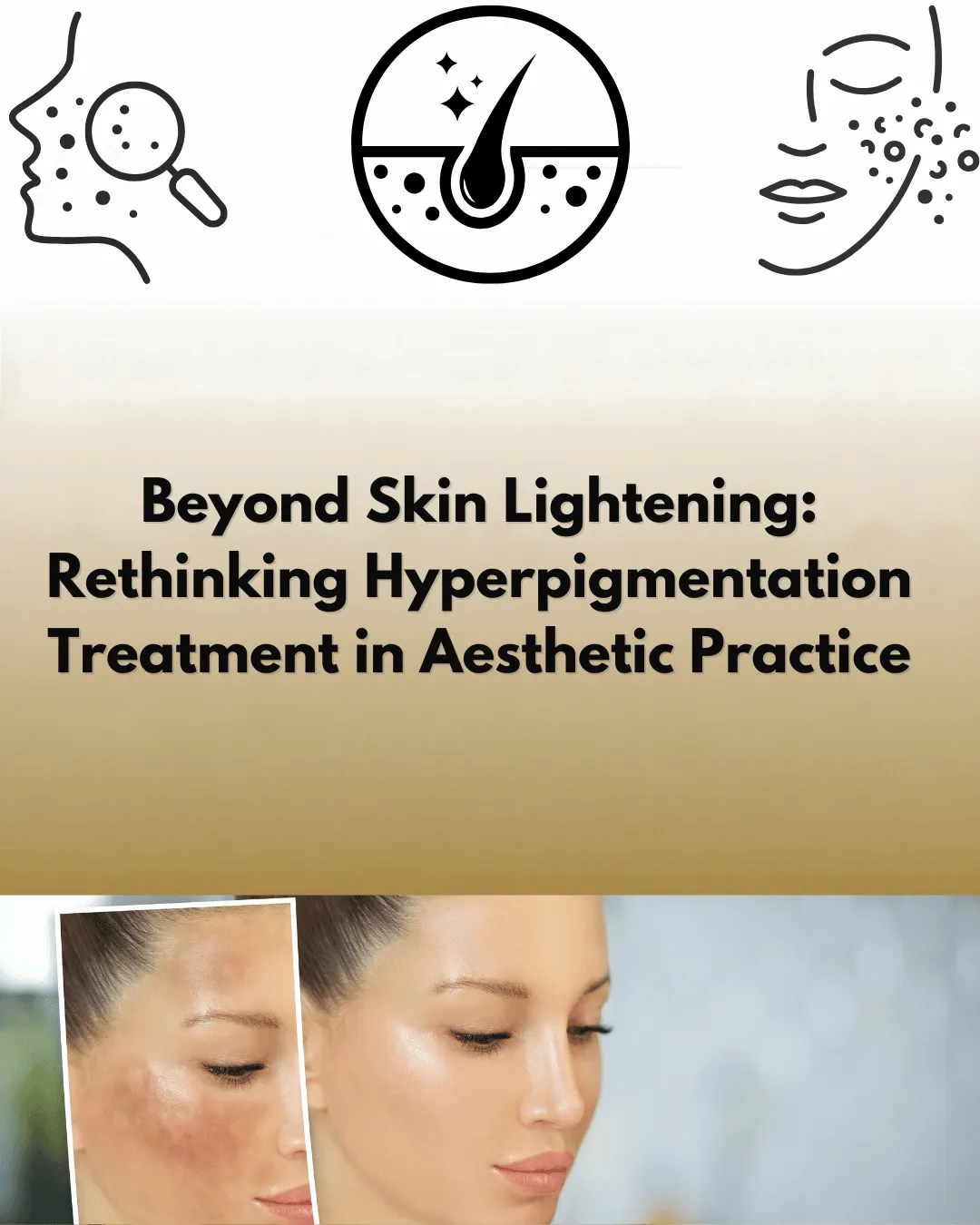
Beyond Skin Lightening: Rethinking Hyperpigmentation Treatment in Aesthetic Practice
By Cheri Frey, MD FAAD, Associate Professor of Dermatology
Pigmentary disorders are a global concern, with recent multinational research suggesting that approximately 50% of adults report experiencing some form of pigmentation disorder. Conditions such as solar lentigines, melasma, and post-inflammatory hyperpigmentation (PIH) are among the most common forms of hyperpigmentation encountered in clinical practice.
Patients with darker skin phototypes are at greater risk for certain pigmentary disorders and may be particularly affected by the pigmentary effects of long-wave ultraviolet A (UVA1) and high-energy visible light. However, hyperpigmentation affects individuals of all races and ethnicities.
The Psychosocial Impact of Hyperpigmentation
Beyond the visible changes in skin pigmentation, these conditions can have a significant psychosocial impact. A study by Wang et al. found that hyperpigmentation was associated with social withdrawal, and many respondents anticipated improvements in self-esteem with successful treatment. Notably, 52.7% reported feeling poorly informed about available treatment options, while 34.7% of those who had tried treatment were dissatisfied with their results. These findings highlight an important disconnect between patient expectations and the treatment experience.
Complicating matters, patients are often inundated with skincare advertisements and social media content, leaving them confused about which products to choose. While increased access to over-the-counter skincare is certainly a positive development, uninformed product purchases, layering multiple active ingredients, and unrealistic expectations regarding treatment timelines can lead to frustration and, in some cases, skin barrier damage and worsening hyperpigmentation.
An Expanding Treatment Arsenal
In my experience, successful management of hyperpigmentation requires a thoughtful, coordinated approach, often combining skincare with in-office treatments. Traditional topical lightening agents, such as hydroquinone, remain valuable treatment options, but we now have an expanding arsenal of ingredients targeting different pathways in melanogenesis. These include cysteamine, which has multiple proposed mechanisms of action; thiamidol, a human tyrosinase inhibitor; and 2-mercaptonicotinoyl glycine (2-MNG), a melanin precursor scavenger. These innovations offer opportunities to target excess pigmentation through complementary mechanisms and develop more individualized treatment strategies.
For patients with more resistant forms of hyperpigmentation, combining topical therapies with in-office procedures, such as chemical peels, microneedling, and laser treatments, may offer additional benefits. However, appropriate selection of the procedure, device parameters, and treatment combinations, along with careful assessment of individual patient risks, is essential to optimizing outcomes and minimizing complications.
What This Means for Med Spa Owners and Aesthetic Practitioners
For medspa owners and aesthetic practitioners, this evolving treatment landscape presents both opportunities and challenges. With so many skincare ingredients, devices, and procedures available, knowing what to use is only part of the equation. Understanding which patients are appropriate candidates, when to combine treatments, and when to avoid certain procedures is equally important. A successful treatment plan must also account for patient expectations, downtime, and the potential for worsening pigmentation. Ultimately, providing excellent care requires more than access to the latest technology; it requires a thorough understanding of the science behind it.
Practitioners need ongoing education to maintain their skills and stay current with emerging innovations. While traditional continuing medical education (CME) conferences provide valuable scientific updates, there remains a need for more practical, case-based education that helps practitioners translate these advances into treatment strategies they can confidently incorporate into clinical practice.
Join the Hyperpigmentation Masterclass
My goal in creating the Hyperpigmentation Masterclass was simple: to bridge the gap between emerging science and everyday clinical practice. On November 21, 2026, at MGM National Harbor, we will bring together an outstanding group of expert faculty to explore hyperpigmentation from melanocyte biology and diagnostic considerations to the evolving treatment landscape, including topical, oral, and procedural interventions. More importantly, we will discuss how to thoughtfully and safely incorporate these advances into patient care.
Whether you are looking to expand your treatment offerings or refine your existing protocols, I hope you will join us for this complimentary educational experience. Our goal is to equip practitioners with the knowledge and practical tools needed to deliver more effective, individualized, and patient-centered care.